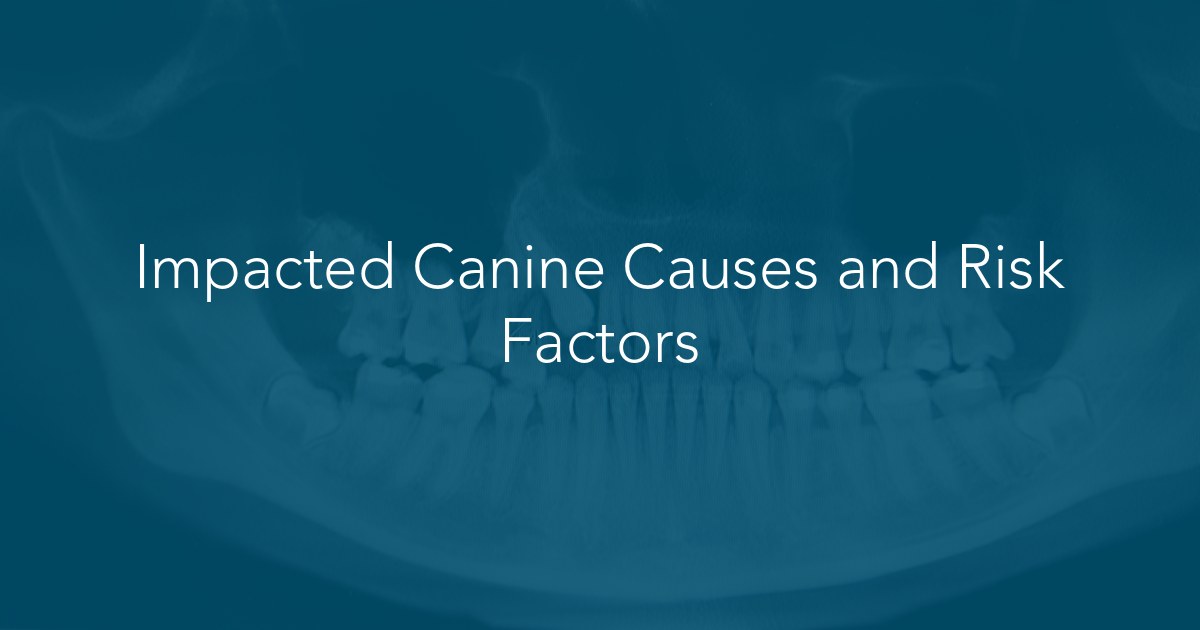
Canine teeth are the second most commonly impacted teeth after wisdom teeth, and when they don't come in on their own, it's worth understanding why.
Most people don't realize there's a problem until a dentist spots it on an X-ray. By that point, the tooth may have been sitting in the wrong position for years without causing obvious discomfort.
Knowing what puts you at risk, how impaction is typically identified, and what can happen if it goes unaddressed will help you make informed decisions before the situation becomes more complex to treat.
Ready to find out if an impacted canine needs attention? Contact Advanced Surgical Associates to schedule a consultation.
What Causes a Canine Tooth to Become Impacted
Some people inherit a jaw size that doesn't leave enough room for every tooth to come in properly, and the canines are often the ones that get crowded out. This isn't something you caused or could have prevented, it's just how some mouths are built.
Limited space in the dental arch is one of the most common causes. When your jaw is narrow or surrounding teeth have shifted, the canine has nowhere to go and gets stuck beneath the gum.
Other dental issues can block the path as well. A baby tooth that lingers too long, or an extra tooth developing in the wrong spot, can physically obstruct the canine's route into position. A slightly narrow jaw paired with a stubborn primary tooth can be enough to prevent eruption entirely.
How Impacted Canines Are Usually Noticed
Most people with an impacted canine don't experience any dramatic symptoms. Routine dental exams and X-rays are usually what bring the issue to light, not pain or discomfort.
One sign worth mentioning to your dentist is a gap where a canine should be. A tooth that never appeared, or appeared later than expected, can point to an underlying positioning problem.
A visible bulge or firmness in the gum near the canine area is another sign. It doesn't always cause discomfort, but it warrants a closer look. In many cases, our oral surgeons identify impacted canines on imaging before you ever noticed anything unusual.
What Happens If It's Left Untreated
An impacted canine that goes unaddressed doesn't stay neutral.
Over time, it can begin pressing against the roots of adjacent teeth, which may cause damage that affects otherwise healthy teeth nearby. When a tooth can't fully emerge, it can create pockets where bacteria accumulate, increasing your risk of gum disease in that part of the mouth.
Timing matters more than many people expect. The longer an impacted canine remains in a poor position, the more difficult it becomes to guide it into alignment later on. Crowding within the dental arch can worsen, and orthodontic treatment becomes more complex.
If you're worried that waiting too long has already closed off your options, that's a concern we hear often, and it's one of the first things we'll work through together at your consultation. Catching it early keeps more options on the table, and getting evaluated now is exactly the right move.
Treatment Options Once It's Identified
Treating an impacted canine is a team effort. Our oral surgeons work closely with your orthodontist, coordinating surgical exposure with the orthodontic treatment needed to bring the tooth into proper alignment.
The surgical side involves uncovering the impacted tooth and, in most cases, attaching a small orthodontic bracket to it. That bracket allows your orthodontist to gently guide the tooth into its correct position in the arch over time. The two specialties work in tandem throughout the process.
What the right approach looks like depends entirely on your case. How deeply the tooth is positioned, which direction it's angled, and your overall oral health all factor into the plan. Treatment options are best discussed after imaging and a careful review of your specific situation.
Why Advanced Surgical Associates Is the Right Place to Start
Catching an impacted canine early gives you more flexibility in how it's treated and a better chance of guiding the tooth into its natural position without more involved intervention.
Advanced Surgical Associates brings a depth of clinical experience that's uncommon in a private practice setting. Dr. Daniel Jeong, Dr. Michelle Kim, and Dr. Hillary Kinney each bring distinct backgrounds to the team. Dr. Jeong serves as a Clinical Instructor in the oral surgery residency program at Boston University and as a state anesthesia examiner for the Massachusetts Society of OMS. Dr. Kim earned dual degrees from Harvard School of Dental Medicine and Harvard Medical School and completed her surgical training at Massachusetts General Hospital.
Our doctors evaluate each case with the kind of detail that shapes better outcomes. If you have questions or want to understand your options, reach out to Advanced Surgical Associates. Our team will make sure you have a complete picture of your situation and your options before any next step begins.